
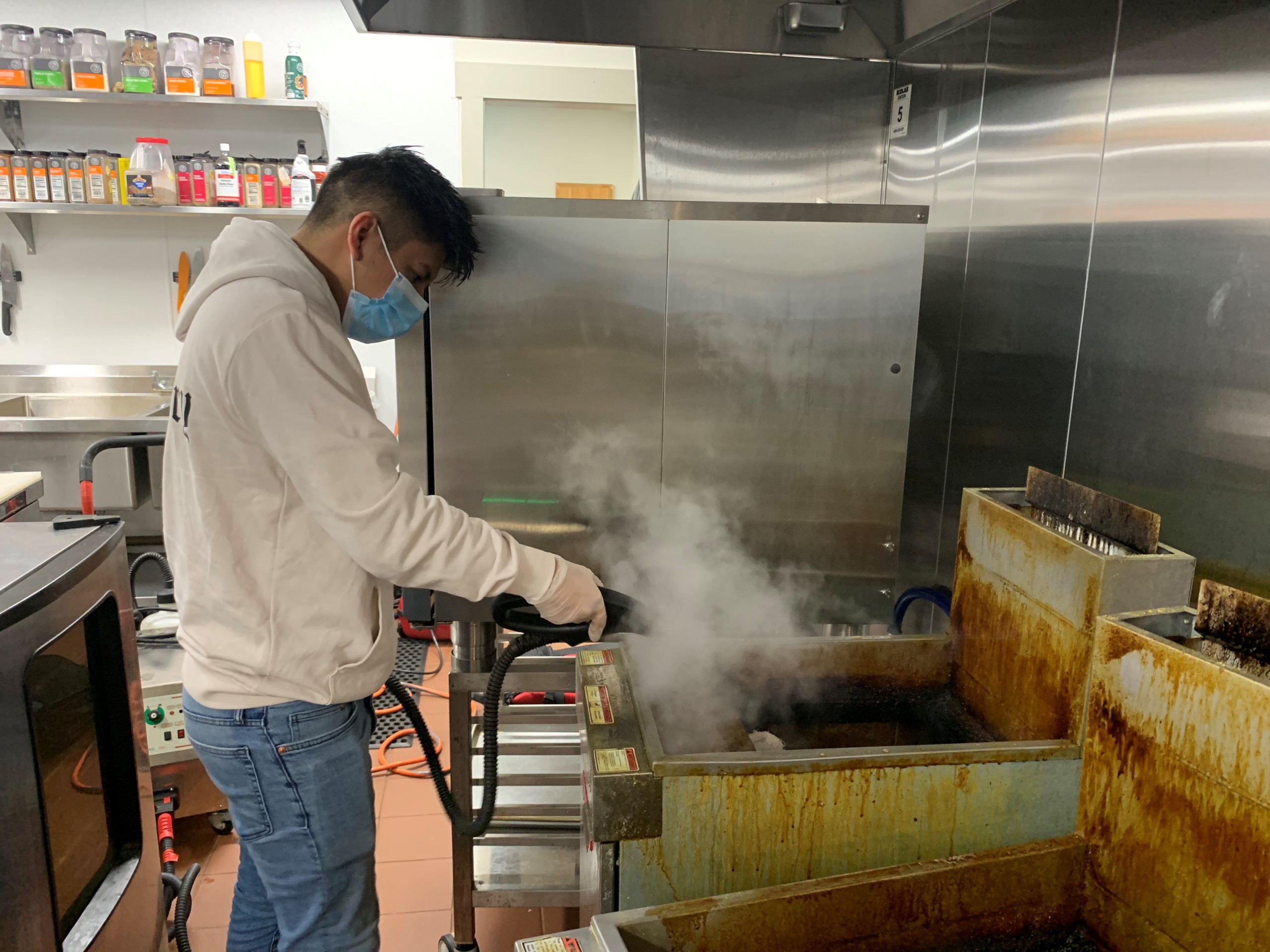
Commercial Kitchen Cleaning
in Dallas, TX
Commercial kitchen cleaning services for restaurants, hotels, and food service facilities throughout Dallas, Texas.
1,304,379
Population
Dallas
County
TX
State
13+
Services
About Dallas
Dallas stands as the ninth-largest city in the United States and a cornerstone of the Dallas-Fort Worth metroplex, which collectively represents the fourth-largest metropolitan area in the nation. With a population exceeding 1.3 million residents, Dallas has established itself as a major commercial, cultural, and culinary hub in North Texas. The city's diverse economy spans finance, technology, telecommunications, healthcare, and hospitality, creating a vibrant ecosystem that supports thousands of restaurants, hotels, and food service establishments.
The Dallas restaurant scene reflects the city's cosmopolitan character, featuring everything from upscale steakhouses in Uptown and the Design District to authentic Tex-Mex establishments in Oak Cliff and innovative fusion restaurants in Deep Ellum. Major dining destinations include the Bishop Arts District, known for its eclectic mix of independent eateries, and the West Village, which offers upscale casual dining experiences. The city's love for barbecue is legendary, with establishments like Pecan Lodge drawing visitors from across the country.
Dallas experiences a humid subtropical climate with hot summers and mild winters. Summer temperatures frequently exceed 95°F, placing significant demands on commercial kitchen ventilation and exhaust systems. The heat and humidity create ideal conditions for grease accumulation and bacterial growth, making professional kitchen cleaning services essential for maintaining health standards and equipment longevity. Winter months, while milder, can still see temperature fluctuations that affect kitchen operations.
The city's key neighborhoods each present unique commercial kitchen needs. Downtown Dallas houses numerous hotel kitchens, convention center food service operations, and corporate dining facilities. The Design District has emerged as a culinary hotspot with chef-driven restaurants requiring meticulous cleaning standards. Deep Ellum's nightlife and music venues generate substantial late-night food service demands, while North Dallas features high-end dining establishments catering to affluent residents.
Dallas is home to several major convention venues including the Kay Bailey Hutchison Convention Center, which hosts hundreds of events annually and requires extensive food service support. The city's hospitality sector includes over 1,000 hotels ranging from boutique properties to major chains, each with commercial kitchen facilities requiring regular professional cleaning.
Nearby cities including Fort Worth, Irving, Garland, and Plano form an interconnected commercial corridor where food service businesses often operate multiple locations. The Dallas-Fort Worth International Airport, one of the busiest airports globally, generates substantial demand for commercial kitchen cleaning services across its extensive food service operations.
For Dallas restaurant owners and food service operators, maintaining pristine kitchen facilities is both a health requirement and a business necessity. Professional commercial kitchen cleaning services help establishments meet Dallas County Health and Human Services regulations while ensuring optimal equipment performance in the demanding Texas climate.
Overview
Dallas, Texas is a major metropolitan center serving as the economic and cultural hub of North Texas. Located in Dallas County with portions extending into Collin, Denton, Kaufman, and Rockwall counties, the city encompasses approximately 385 square miles of diverse neighborhoods and commercial districts. The city's restaurant and hospitality industry generates billions in annual revenue, supporting a vast network of commercial kitchen operations that require professional cleaning and maintenance services.
Climate Considerations
Dallas experiences long, hot summers with average high temperatures reaching 96°F in July and August. The subtropical climate creates challenges for commercial kitchen operations, as high humidity combined with intense heat accelerates grease buildup and creates conditions conducive to bacterial growth. Professional kitchen cleaning services must address these climate-specific concerns to maintain food safety standards and equipment efficiency throughout the year.
Business Landscape
The Dallas economy ranks among the strongest in the nation, with significant presence in banking, telecommunications, technology, energy, healthcare, and logistics. This economic diversity supports a thriving restaurant industry that ranges from fast-casual chains to Michelin-recognized fine dining establishments. The city's business-friendly environment has attracted major corporate headquarters, each with corporate dining facilities requiring regular commercial kitchen maintenance.
Dining Scene
Dallas has earned recognition as one of America's great food cities, with notable concentrations of restaurants in neighborhoods including Uptown, Deep Ellum, the Bishop Arts District, Knox-Henderson, and the Design District. The city hosts the annual Dallas Restaurant Week, showcasing hundreds of participating establishments. From legendary barbecue joints to innovative fine dining concepts, Dallas's culinary landscape demands professional kitchen cleaning services that can accommodate diverse operational styles and equipment configurations.
Our Services in Dallas
Commercial Kitchen Cleaning of Texas provides comprehensive kitchen cleaning services to businesses throughout Dallas. Our experienced technicians understand the unique requirements of local health codes and deliver services that keep your kitchen compliant and operating at peak efficiency.
Why Dallas Businesses Choose Us
- Local expertise and knowledge of Dallas regulations
- Flexible scheduling to minimize business disruption
- Cleaning protocols matched to the facility scope
- Satisfaction guarantee on all services
Areas We Serve in Dallas
Request a Quote
Get a free, no-obligation quote for commercial kitchen cleaning services in Dallas.
Get Your QuoteContact Information
Phone:
(214) 225-4604
Service Area:
Dallas, TX and surrounding areas
Zip Codes Served
Nearby Service Areas
locations planning guide
How to plan dallas tx for a commercial kitchen in Dallas
Commercial Kitchen Cleaning of Texas uses the following planning framework to help property managers and business owners turn a request for commercial kitchen and food-service cleaning into a scope that can be walked, priced, scheduled, and checked. It is designed for practical comparison and does not replace site-specific safety, material, vendor, or regulatory requirements.
Define the Work Before Pricing It
Dallas Tx should begin with a written definition of the rooms, surfaces, fixtures, equipment boundaries, and access conditions included in the work. A useful scope separates routine tasks from periodic restoration so the facility manager can see what happens on every visit and what occurs only on a planned cycle. Change orders are easier to avoid when the initial dallas tx proposal records current conditions. Photographs, floor-type notes, access limitations, and known buildup give both sides a shared baseline for deciding what belongs in startup work and what belongs in recurring maintenance. A commercial scope should distinguish appearance cleaning from hygiene work and asset maintenance. Dust removal, disinfection, floor finish care, glass restoration, and debris control solve different problems, use different processes, and often belong on different frequencies. Square footage alone does not define the effort required for dallas tx. Occupancy, floor materials, restroom count, food or production activity, security procedures, furniture density, and the time available between closing and reopening all affect labor and equipment planning.
Build the Schedule Around Operations
Facilities with irregular occupancy should use a flexible service calendar. Seasonal traffic, events, construction phases, tenant move-ins, inventory cycles, and weather can all create temporary cleaning demand that a rigid schedule will miss. A dependable plan includes a method for reporting schedule changes. The facility contact should know whom to notify, how much lead time is needed, and how missed or added visits affect the monthly program before an urgent request arises. A nightly, daily, weekly, or project schedule changes more than visit frequency. It changes how much soil accumulates between visits, which tools are appropriate, how long each visit takes, and whether periodic deep work must be layered into the agreement. For Dallas–Fort Worth properties, travel windows and building access can materially affect the usable service period. A realistic schedule accounts for security handoffs and operating deadlines rather than promising a start time that leaves too little time to finish.
Make Quality Control Observable
Inspection frequency should reflect the complexity of the account. A small weekly office may need periodic supervisory review, while a high-traffic or regulated environment may require documented checks several times each week. Useful performance conversations separate an isolated miss from a recurring process failure. One unemptied bin requires correction; repeated misses in the same wing may indicate unclear zoning, inadequate time, or a checklist that does not match the building. A quality program should explain how corrections are handled. The facility contact needs a clear response path, a reasonable correction window, and confirmation when the issue is closed rather than a vague assurance that someone will look into it. Before-and-after documentation is especially valuable for one-time or restorative dallas tx. It establishes the starting condition, records the completed result, and helps the facility manager decide whether a recurring maintenance cycle would prevent the same buildup.
Match Methods to Materials and Risk
A material-safety discussion should include storage and labeling. Facility contacts should know where products and equipment will be kept, which rooms remain accessible to occupants, and how spills or damaged containers are reported. Color-coded cloths, pads, and tools can reduce cross-use between restrooms, food areas, workspaces, and public surfaces. The exact system matters less than having a documented method the crew can follow consistently. Dwell time and physical removal are central to effective cleaning. A product cannot perform as intended if it is wiped away immediately, and loosened soil still needs to be removed with clean tools rather than redistributed across the surface. Product selection should match the task and the occupied environment. Cleaning, degreasing, disinfecting, descaling, and finishing are different functions; using one product for every surface can leave residue, reduce effectiveness, or shorten asset life.
Use the Walkthrough to Build the Scope
If the requested dallas tx includes restorative work, identify the difference between a first-service reset and ongoing maintenance. Startup work may require additional labor that should not be hidden inside the recurring visit price. Bring a current floor plan, operating schedule, and list of known problem areas to the walkthrough. These details help Commercial Kitchen Cleaning of Texas organize dallas tx around actual conditions instead of estimating from square footage and a short phone description. Ask department leads or regular occupants where cleaning failures are most visible. Facility managers often know the formal complaints, while daily users can identify recurring issues such as neglected corners, supply shortages, or timing conflicts. A useful walkthrough ends with next steps: who will receive the written scope, who can approve revisions, whether a second technical visit is required, and what information is still needed before pricing is final.
Put the Service Agreement in Writing
Insurance and vendor-document requirements should be confirmed during proposal review rather than after award. If the property requires a certificate, additional insured wording, vendor portal registration, or special access documentation, those steps can affect the startup date. A commercial cleaning agreement should attach or reproduce the approved scope, frequency, service window, periodic task calendar, supply responsibilities, access rules, and communication contacts. The written detail protects both the property and the service team. The agreement should state how holidays, weather closures, and client-requested skips are handled. These events affect visit counts and staffing, and the billing treatment should be clear before the first calendar exception. The agreement should explain how additional work is approved. Emergency cleanup, event service, construction dust, floor restoration, and extra porter coverage should not be performed or billed through an informal request that no one can later verify.
Plan for Dallas Facility Conditions
Storm seasons can create short-notice needs around entrances, exterior glass, tracked moisture, construction material, and debris. A recurring account should know how to request work outside the normal scope and whether priority response is available. Properties across Dallas–Fort Worth vary widely in access, occupancy, and operating schedule. A downtown office, suburban medical suite, industrial building, retail center, and hospitality property should not receive the same labor plan simply because their square footage is similar. Heat and air-conditioning runtime can increase dust movement through vents, ledges, high surfaces, and return-air zones. Periodic detail work should be scheduled before accumulation becomes visible or begins cycling back into occupied areas. A local service plan should account for the property’s immediate environment. Construction nearby, open parking, landscaping, loading activity, and pedestrian traffic can change how quickly dust and debris return after a visit.
Compare Providers on More Than Price
When comparing dallas tx proposals, normalize the scope before comparing price. A lower monthly number may exclude periodic work, supplies, supervision, floor care, or enough labor to complete the stated checklist. The final decision should align service frequency with the facility’s real use. Buying fewer visits than the property needs creates visible decline; buying unnecessary frequency wastes budget that could be directed to periodic or high-priority work. References are most useful when the compared account resembles the property in size, use, and schedule. A successful small office account does not by itself demonstrate the systems needed for a large, high-traffic, or specialized facility. Review the proposal for vague language. Terms such as “as needed,” “regularly,” and “periodically” should be converted into frequencies, triggers, or approval rules before the agreement is signed.
Start, Measure, and Adjust the Program
Crew orientation should cover the approved scope, building access, material cautions, waste handling, supply storage, security, and the communication path for exceptions. Written information is more dependable than verbal instructions passed between shifts. The first visit should not be treated as an ordinary maintenance visit when buildup already exists. Startup cleaning establishes a maintainable baseline and gives the crew a realistic view of the time required for future service. Task sequencing affects results. High dusting should precede lower-surface cleaning, dry soil removal should precede wet work, and areas with restricted reopening times should be completed early enough to dry or ventilate. A stable program still needs review after renovations, staffing growth, seasonal traffic, operating-hour changes, or new equipment. Each change can alter soil load, access, or the time available for dallas tx.
Bring to the walkthrough
- Approximate square footage, floor plan, and operating hours
- Current frequency, known complaints, and priority areas
- Flooring and surface notes, restricted rooms, and access rules
- Desired start date, budget constraints, and approval contacts
Expect in a written proposal
- Task scope by zone and visit frequency
- Service windows, periodic work, and supply responsibility
- Quality checks, communication, and correction procedures
- Pricing assumptions, exclusions, and change-order rules