
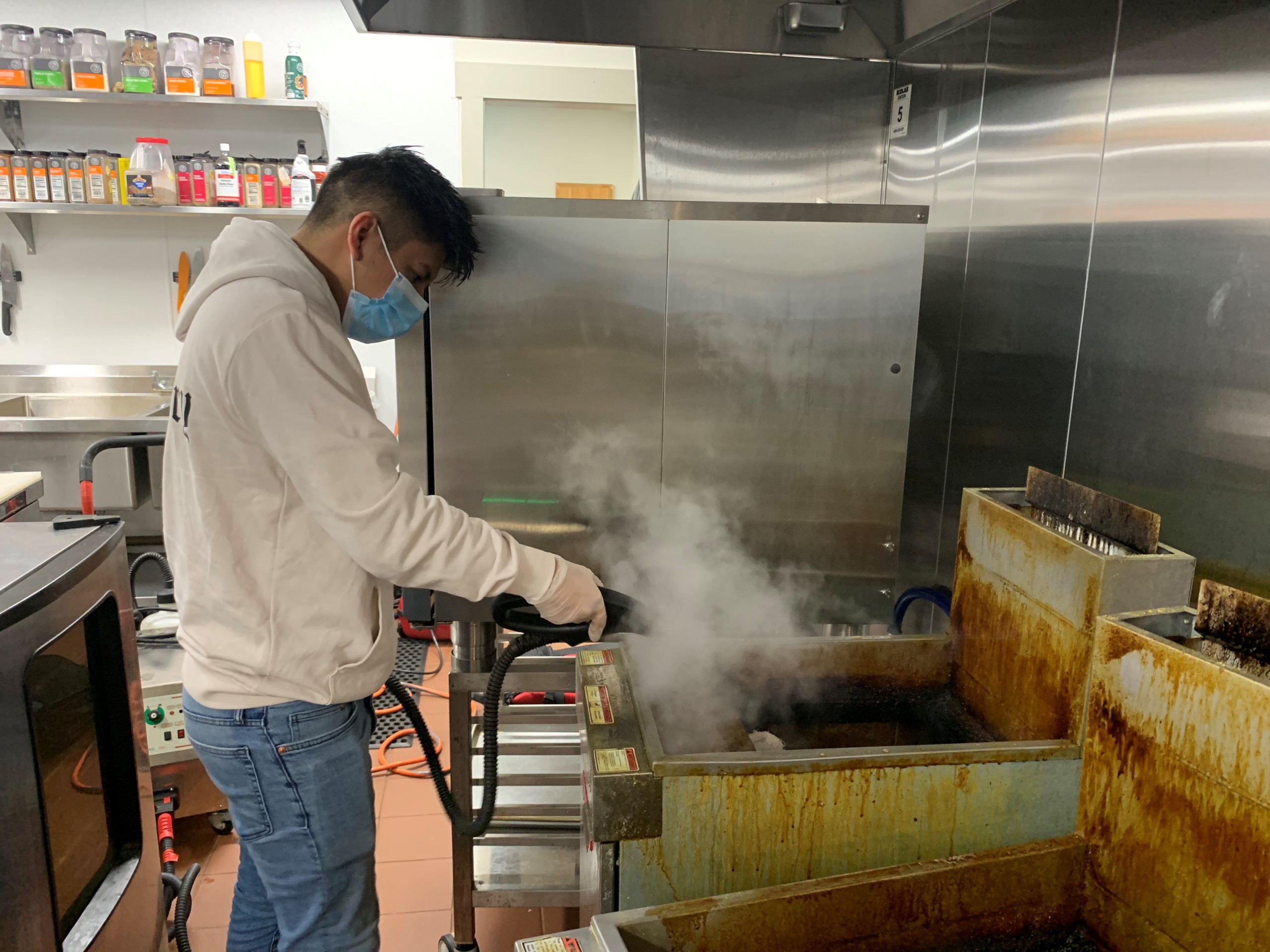
Commercial Kitchen Cleaning
in Plano, TX
Premium commercial kitchen cleaning services for Plano restaurants, corporate dining, and catering facilities.
287,677
Population
Collin
County
TX
State
13+
Services
About Plano
Plano, Texas stands as one of the most affluent and rapidly developing cities in the Dallas-Fort Worth metroplex, with a population of approximately 287,677 residents. Located approximately 20 miles north of downtown Dallas, Plano has evolved from a quiet farming community into a major corporate headquarters destination and upscale suburban center. The city's reputation for excellent schools, safe neighborhoods, and high quality of life has attracted major corporations and affluent residents, creating a sophisticated commercial environment with distinct commercial kitchen cleaning requirements.
Plano's corporate landscape is impressive, with more Fortune 1000 company headquarters per capita than nearly any other U.S. city. Major employers including Toyota North America, Frito-Lay, JCPenney, Dr Pepper Snapple Group, and Pizza Hut have established significant operations in Plano. These corporate campuses typically feature extensive employee dining facilities, executive cafeterias, and catering kitchens that require professional commercial cleaning services. The high standards of corporate environments demand meticulous attention to kitchen cleanliness and food safety protocols.
The Shops at Legacy and Legacy West represent Plano's premier mixed-use developments, combining luxury retail, upscale dining, and Class A office space. Legacy West, in particular, has emerged as a destination for fine dining with restaurants operated by celebrity chefs and acclaimed culinary concepts. These high-end establishments require commercial kitchen cleaning services that meet exacting standards while working with sophisticated kitchen equipment and premium finishes that demand careful handling.
Plano's restaurant scene reflects its affluent demographic, featuring a concentration of upscale steakhouses, sushi restaurants, wine bars, and chef-driven concepts. The city has become a dining destination for the entire North Texas region, with establishments in the Shops at Legacy, Legacy Hall, and Preston Park Boulevard drawing customers from across the metroplex. This reputation for quality dining creates expectations for immaculate kitchen facilities that professional cleaning services help maintain.
The city is home to several major sports facilities including Dr Pepper Ballpark, home of the Frisco RoughRiders minor league baseball team, and Ford Center at The Star, the Dallas Cowboys' training facility and corporate headquarters. These venues generate significant food service operations requiring specialized commercial kitchen cleaning services that can accommodate event schedules and high-volume operations during games and special events.
Plano's climate follows the North Texas pattern with hot, humid summers and mild winters. Summer temperatures regularly exceed 95°F, creating substantial demands on commercial kitchen ventilation systems. The city's rapid growth has created significant development, with new restaurants and food service establishments opening regularly to serve the expanding population. This growth means ongoing demand for commercial kitchen cleaning services to support new businesses and established operations alike.
The Legacy business district has emerged as a major employment center, with corporate campuses supporting thousands of workers who rely on on-site dining facilities. These corporate kitchens often serve breakfast, lunch, and catering functions, creating continuous operational demands that require regular professional cleaning to maintain health standards and equipment efficiency. Many of these facilities operate on tight schedules, requiring cleaning services that can work efficiently without disrupting business operations.
Plano's diverse population includes significant South and East Asian communities, particularly in areas like the 75 corridor and Independence Parkway. This diversity is reflected in the restaurant scene, with authentic Indian, Chinese, Korean, and Vietnamese establishments alongside traditional American and European cuisine restaurants. Different cooking styles create varying types of grease and residues, requiring commercial kitchen cleaning services that understand how to address the specific challenges of diverse culinary operations.
For Plano restaurant owners and food service operators, maintaining pristine kitchen facilities is essential to meeting customer expectations in a competitive, quality-focused market. Professional commercial kitchen cleaning services help Plano businesses maintain the high standards expected by discerning customers while ensuring compliance with Collin County health regulations and minimizing fire risks associated with grease accumulation.
Overview
Plano, Texas spans approximately 72 square miles in Collin County, with a small portion extending into Denton County. Founded in 1873 and incorporated in 1881, the city transformed from an agricultural community into one of America's most successful suburban cities. Plano's commercial kitchen cleaning needs reflect its status as a corporate headquarters destination and affluent residential community, encompassing high-end restaurant kitchens, sophisticated corporate dining facilities, and diverse ethnic cuisine establishments.
Climate Considerations
Plano experiences a humid subtropical climate with hot summers averaging highs of 94°F and mild winters with average lows of 33°F. The city receives approximately 40 inches of rainfall annually. For commercial kitchens, Plano's climate creates challenges similar to other North Texas locations, with heat and humidity accelerating grease accumulation and creating conditions where thorough, regular cleaning is essential for safety and efficiency. The city's rapid growth has increased demand for air conditioning, placing additional loads on kitchen ventilation systems.
Business Landscape
Plano's economy centers on corporate headquarters, professional services, technology, and retail. The city hosts more Fortune 1000 headquarters per capita than nearly any U.S. city, including Toyota Motor North America, Frito-Lay, JCPenney, and others. This corporate presence creates substantial demand for employee dining facilities and catering operations. The Legacy and Legacy West developments have created concentrated business districts with extensive food service operations. Additionally, major retail centers including Stonebriar Centre and The Shops at Willow Bend generate restaurant and food court cleaning needs.
Dining Scene
Plano's dining scene reflects its affluent, diverse population with a mix of upscale establishments and authentic ethnic restaurants. Legacy Hall and the Legacy West area feature chef-driven concepts and fine dining. The 75 corridor and Preston Road offer diverse Asian cuisine including Korean barbecue, sushi, and Chinese hot pot. Traditional steakhouses, Italian restaurants, and American bistros serve the broader population. This variety means commercial kitchen cleaning services must accommodate different cooking methods, from high-heat wok cooking to delicate pastry preparation, each presenting unique cleaning challenges.
Our Services in Plano
Commercial Kitchen Cleaning of Texas provides comprehensive kitchen cleaning services to businesses throughout Plano. Our experienced technicians understand the unique requirements of local health codes and deliver services that keep your kitchen compliant and operating at peak efficiency.
Why Plano Businesses Choose Us
- Local expertise and knowledge of Plano regulations
- Flexible scheduling to minimize business disruption
- Cleaning protocols matched to the facility scope
- Satisfaction guarantee on all services
Areas We Serve in Plano
Request a Quote
Get a free, no-obligation quote for commercial kitchen cleaning services in Plano.
Get Your QuoteContact Information
Phone:
(214) 225-4604
Service Area:
Plano, TX and surrounding areas
Zip Codes Served
Nearby Service Areas
locations planning guide
How to plan plano tx for a commercial kitchen in Dallas
Commercial Kitchen Cleaning of Texas uses the following planning framework to help property managers and business owners turn a request for commercial kitchen and food-service cleaning into a scope that can be walked, priced, scheduled, and checked. It is designed for practical comparison and does not replace site-specific safety, material, vendor, or regulatory requirements.
Define the Work Before Pricing It
The strongest plano tx plan names measurable outcomes rather than relying on broad phrases such as “keep it clean.” Examples include streak-free entry glass, stocked and odor-controlled restrooms, debris-free floor edges, sanitized touchpoints, and completion before a stated opening time. For multi-tenant or mixed-use properties, plano tx should be divided by responsibility zone. Common areas, tenant suites, back-of-house spaces, loading areas, public restrooms, and restricted rooms can then receive schedules and approval rules that match their actual use. Square footage alone does not define the effort required for plano tx. Occupancy, floor materials, restroom count, food or production activity, security procedures, furniture density, and the time available between closing and reopening all affect labor and equipment planning. A commercial scope should distinguish appearance cleaning from hygiene work and asset maintenance. Dust removal, disinfection, floor finish care, glass restoration, and debris control solve different problems, use different processes, and often belong on different frequencies.
Build the Schedule Around Operations
Recurring plano tx should include planned periodic work instead of waiting for visible deterioration. Rotating detail tasks through monthly or quarterly cycles protects floors, fixtures, glass, vents, edges, and other zones that routine visits cannot address completely. Daytime and after-hours service solve different operational problems. Day porter coverage manages visible conditions while people are present; after-hours crews complete disruptive or time-intensive tasks when work areas can be accessed safely and thoroughly. Access planning is part of service planning. Keys, badges, alarm procedures, loading access, elevator reservations, escort rules, and locked-room approvals should be confirmed before the first plano tx visit so the crew can complete the full scope without improvising. Scheduling should be built around operating hours and risk, not around the cleaning company’s convenience. Some commercial kitchen environments need a complete after-hours reset, while others benefit from daytime attention to entrances, restrooms, spills, or high-traffic common areas.
Make Quality Control Observable
A quality program should explain how corrections are handled. The facility contact needs a clear response path, a reasonable correction window, and confirmation when the issue is closed rather than a vague assurance that someone will look into it. Before-and-after documentation is especially valuable for one-time or restorative plano tx. It establishes the starting condition, records the completed result, and helps the facility manager decide whether a recurring maintenance cycle would prevent the same buildup. A single complaint channel prevents service issues from disappearing between building occupants, property management, and the cleaning crew. Requests should be logged with the location, task, urgency, and desired completion time so the response can be verified. Inspection frequency should reflect the complexity of the account. A small weekly office may need periodic supervisory review, while a high-traffic or regulated environment may require documented checks several times each week.
Match Methods to Materials and Risk
Product selection should match the task and the occupied environment. Cleaning, degreasing, disinfecting, descaling, and finishing are different functions; using one product for every surface can leave residue, reduce effectiveness, or shorten asset life. Dwell time and physical removal are central to effective cleaning. A product cannot perform as intended if it is wiped away immediately, and loosened soil still needs to be removed with clean tools rather than redistributed across the surface. Consumable supplies deserve their own responsibility list. Soap, paper products, liners, dispensers, batteries, air fresheners, and specialty items may be client supplied, contractor supplied, or billed separately, but the agreement should not leave that question open. For sensitive or newly installed materials, a small test area can prevent expensive mistakes. The service plan should identify who approves the test result before broader cleaning or restoration proceeds.
Use the Walkthrough to Build the Scope
Discuss current service honestly during the walkthrough. What works should be preserved, what fails should be corrected, and any unrealistic expectation should be resolved before it becomes a recurring dispute after startup. The walkthrough should follow the facility’s traffic pattern from entrances through work areas, restrooms, support rooms, and exits. This reveals where soil enters, where it concentrates, and which tasks must be completed in a particular order. For larger properties, divide the walkthrough into zones and record the floor type, use, occupancy, and desired frequency for each. This produces a proposal that can be adjusted by zone without rewriting the entire program. Ask department leads or regular occupants where cleaning failures are most visible. Facility managers often know the formal complaints, while daily users can identify recurring issues such as neglected corners, supply shortages, or timing conflicts.
Put the Service Agreement in Writing
A commercial cleaning agreement should attach or reproduce the approved scope, frequency, service window, periodic task calendar, supply responsibilities, access rules, and communication contacts. The written detail protects both the property and the service team. Pricing should state whether it is monthly, per visit, hourly, or project based and should identify the assumptions behind it. Changes in occupied square footage, frequency, access time, or task scope need an agreed method for repricing. Service-level expectations should be realistic and observable. A promise of “perfect cleaning” is less useful than response times, inspection routines, named completion outcomes, and an escalation process for repeated deficiencies. Insurance and vendor-document requirements should be confirmed during proposal review rather than after award. If the property requires a certificate, additional insured wording, vendor portal registration, or special access documentation, those steps can affect the startup date.
Plan for Dallas Facility Conditions
Dallas facilities contend with long cooling seasons, tracked-in dust, pollen, severe-weather debris, and rapid development activity. Those conditions can influence entry cleaning, high dusting, floor care, glass maintenance, and the timing of periodic deep work. DFW traffic makes realistic arrival windows important, especially when a crew must meet security or elevator access at a fixed time. The plan should protect enough on-site time to complete the work rather than compressing the scope after a delayed handoff. Properties across Dallas–Fort Worth vary widely in access, occupancy, and operating schedule. A downtown office, suburban medical suite, industrial building, retail center, and hospitality property should not receive the same labor plan simply because their square footage is similar. Fast regional growth creates frequent move-ins, renovations, tenant turnovers, and occupancy changes. The cleaning scope should be reviewed when a property changes use instead of assuming the previous tenant’s schedule remains appropriate.
Compare Providers on More Than Price
Evaluate communication alongside cleaning technique. A facility manager needs timely updates, a named account contact, documented service requests, and a reliable process for resolving issues without repeatedly explaining the account. A pilot or structured startup can be useful when the facility is complex or the current condition is uncertain. Define what will be evaluated, how long the evaluation lasts, and what information determines the permanent scope. Review the proposal for vague language. Terms such as “as needed,” “regularly,” and “periodically” should be converted into frequencies, triggers, or approval rules before the agreement is signed. When comparing plano tx proposals, normalize the scope before comparing price. A lower monthly number may exclude periodic work, supplies, supervision, floor care, or enough labor to complete the stated checklist.
Start, Measure, and Adjust the Program
After the first service cycle, compare actual labor and facility condition with the proposal assumptions. If the original scope was inaccurate, adjust it openly rather than expecting quality to survive an unrealistic workload. The first visit should not be treated as an ordinary maintenance visit when buildup already exists. Startup cleaning establishes a maintainable baseline and gives the crew a realistic view of the time required for future service. The crew should record conditions outside the approved scope rather than quietly ignoring them or performing unapproved work. Photos and concise notes allow the facility manager to decide whether a separate service is warranted. Closeout reporting should match the account’s complexity. A small property may need simple completion confirmation; a larger or specialized account may need inspection notes, issue photographs, supply alerts, and a record of periodic tasks.
Bring to the walkthrough
- Approximate square footage, floor plan, and operating hours
- Current frequency, known complaints, and priority areas
- Flooring and surface notes, restricted rooms, and access rules
- Desired start date, budget constraints, and approval contacts
Expect in a written proposal
- Task scope by zone and visit frequency
- Service windows, periodic work, and supply responsibility
- Quality checks, communication, and correction procedures
- Pricing assumptions, exclusions, and change-order rules