Commercial Kitchen Floor Scrubbing
Industrial-grade floor scrubbing and degreasing to eliminate slip hazards and maintain a sanitary kitchen environment.
About Our Commercial Kitchen Floor Scrubbing Service
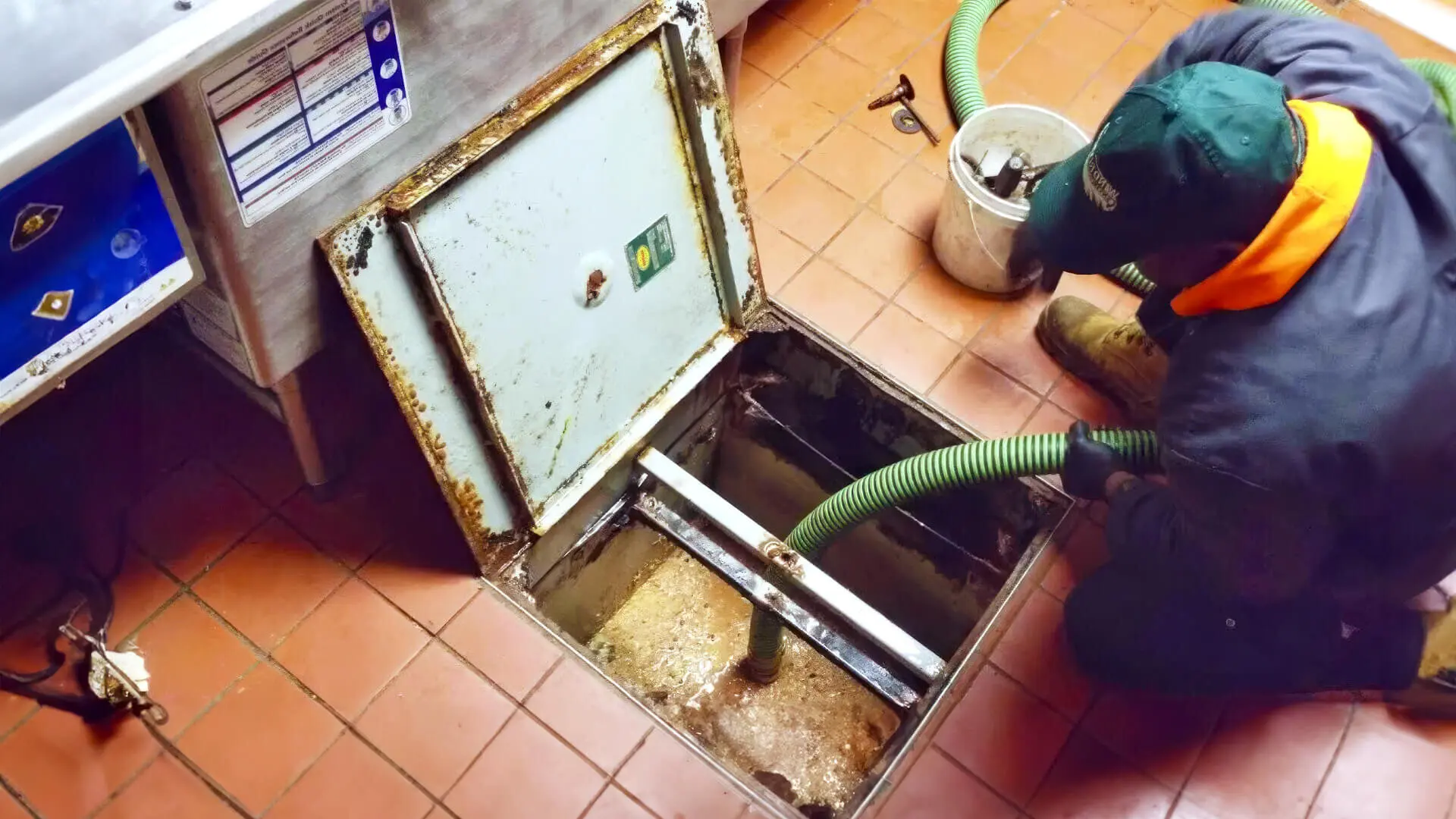
Our commercial kitchen floor scrubbing service uses industrial equipment to deep clean and degrease kitchen floors. We remove built-up grease, food residue, and stains that regular mopping cannot address. Clean floors are essential for preventing slip hazards and maintaining a sanitary environment. Our process includes pre-treatment, mechanical scrubbing, and thorough rinsing to leave your floors safe and spotless.
Commercial kitchen floors face unique challenges that residential cleaning methods cannot address. Constant exposure to grease, food spills, and heavy foot traffic creates layers of buildup that regular mopping only spreads around. Over time, this accumulation creates dangerous slip hazards, harbors bacteria, and violates health code standards. Our professional floor scrubbing service addresses these issues with industrial-strength equipment and techniques.
Our floor scrubbing process begins with a thorough evaluation of your floor type and condition. We identify problem areas such as heavy grease buildup, staining, or damaged grout. Our technicians then apply specialized pre-treatment solutions that break down grease and loosen embedded debris. This preparation is essential for effective deep cleaning.
Using industrial auto-scrubbers and high-pressure equipment, we mechanically scrub floor surfaces to remove years of accumulated buildup. Our equipment reaches into grout lines and textured surfaces where bacteria hide. We pay special attention to areas around cooking equipment where grease accumulation is heaviest, ensuring these high-risk zones receive thorough treatment.
After scrubbing, we thoroughly rinse floors to remove all cleaning agents and suspended debris. The result is a floor that not only looks clean but is genuinely sanitary and safe. Regular professional scrubbing prevents the slip hazards that cause workplace injuries and creates the pristine conditions health inspectors expect to see.
Service Overview
Commercial kitchen floor scrubbing is an industrial-grade cleaning service that removes built-up grease and grime from kitchen floors. This service goes far beyond regular mopping to address the deep accumulation that creates slip hazards and harbors bacteria. Professional floor scrubbing is essential for maintaining safety and meeting health code requirements.
Our Process
Our floor scrubbing process uses industrial equipment for maximum effectiveness. We begin by clearing the floor area and applying degreasing pre-treatment to break down stubborn buildup. Industrial auto-scrubbers with specialized brushes agitate and lift debris from floor surfaces and grout lines. High-pressure rinsing removes all suspended soils and cleaning agents. We complete the process with proper drying and can apply non-slip treatments as needed.
Benefits
Professional floor scrubbing dramatically reduces slip and fall hazards in your kitchen, protecting your employees and reducing liability. It eliminates bacteria harboring in floor surfaces and grout lines, supporting your food safety program. Clean floors create a better impression during health inspections and improve overall kitchen hygiene. Regular scrubbing also extends the life of your flooring investment.
Key Benefits
- Industrial auto-scrubber cleaning
- Heavy grease and grime removal
- Grout line deep cleaning
- High-pressure rinsing system
- Slip-resistant floor treatments
Industries We Serve
Service Areas
We provide commercial kitchen floor scrubbing throughout the Dallas-Fort Worth Metroplex, including all major cities and surrounding areas. Our mobile service teams are equipped to handle projects of all sizes, from small restaurants to large commercial facilities.
Request a Quote
Get a free, no-obligation quote for commercial kitchen floor scrubbing services.
Get Your QuoteLocations We Serve
Contact Information
services planning guide
How to plan commercial kitchen floor scrubbing for a commercial kitchen in Dallas
Commercial Kitchen Cleaning of Texas uses the following planning framework to help property managers and business owners turn a request for commercial kitchen and food-service cleaning into a scope that can be walked, priced, scheduled, and checked. It is designed for practical comparison and does not replace site-specific safety, material, vendor, or regulatory requirements.
Define the Work Before Pricing It
Before pricing commercial kitchen floor scrubbing, document exclusions as carefully as inclusions. Exterior work, high access, consumable supplies, waste handling, specialty floor restoration, equipment interiors, and event cleanup can be scheduled correctly only when responsibility is explicit. A commercial scope should distinguish appearance cleaning from hygiene work and asset maintenance. Dust removal, disinfection, floor finish care, glass restoration, and debris control solve different problems, use different processes, and often belong on different frequencies. A walkthrough for commercial kitchen floor scrubbing is most productive when the decision-maker identifies the spaces that create complaints, the areas that carry the most traffic, and the tasks the current program misses. Those observations turn a generic checklist into a practical scope tied to the way the property is actually used. Change orders are easier to avoid when the initial commercial kitchen floor scrubbing proposal records current conditions. Photographs, floor-type notes, access limitations, and known buildup give both sides a shared baseline for deciding what belongs in startup work and what belongs in recurring maintenance.
Build the Schedule Around Operations
Scheduling should be built around operating hours and risk, not around the cleaning company’s convenience. Some commercial kitchen environments need a complete after-hours reset, while others benefit from daytime attention to entrances, restrooms, spills, or high-traffic common areas. For Dallas–Fort Worth properties, travel windows and building access can materially affect the usable service period. A realistic schedule accounts for security handoffs and operating deadlines rather than promising a start time that leaves too little time to finish. Daytime and after-hours service solve different operational problems. Day porter coverage manages visible conditions while people are present; after-hours crews complete disruptive or time-intensive tasks when work areas can be accessed safely and thoroughly. A dependable plan includes a method for reporting schedule changes. The facility contact should know whom to notify, how much lead time is needed, and how missed or added visits affect the monthly program before an urgent request arises.
Make Quality Control Observable
Quality control works best when it is tied to the site-specific scope. A supervisor can inspect completion against named rooms and outcomes, record exceptions, assign corrections, and identify patterns that require a change in staffing, tools, or frequency. The account review should examine service requests, inspection findings, occupancy changes, supply use, and upcoming facility events. That review keeps the program aligned with the property instead of allowing an old scope to continue after the building changes. Consistent crew assignments improve commercial kitchen floor scrubbing because the team learns access routines, material sensitivities, recurring problem areas, and the expectations of the facility contact. Coverage plans are still necessary for absences so consistency does not depend on one individual. A quality program should explain how corrections are handled. The facility contact needs a clear response path, a reasonable correction window, and confirmation when the issue is closed rather than a vague assurance that someone will look into it.
Match Methods to Materials and Risk
For sensitive or newly installed materials, a small test area can prevent expensive mistakes. The service plan should identify who approves the test result before broader cleaning or restoration proceeds. Product selection should match the task and the occupied environment. Cleaning, degreasing, disinfecting, descaling, and finishing are different functions; using one product for every surface can leave residue, reduce effectiveness, or shorten asset life. Equipment should be selected for the facility rather than for convenience. HEPA filtration, low-moisture extraction, auto-scrubbing, water-fed poles, pressure equipment, or detail tools may be appropriate depending on access, surface, soil, and reopening time. Dwell time and physical removal are central to effective cleaning. A product cannot perform as intended if it is wiped away immediately, and loosened soil still needs to be removed with clean tools rather than redistributed across the surface.
Use the Walkthrough to Build the Scope
Access and safety constraints should be demonstrated, not merely mentioned. Alarm panels, loading doors, restricted areas, waste points, water access, electrical access, and equipment storage can change the labor plan materially. Ask department leads or regular occupants where cleaning failures are most visible. Facility managers often know the formal complaints, while daily users can identify recurring issues such as neglected corners, supply shortages, or timing conflicts. For larger properties, divide the walkthrough into zones and record the floor type, use, occupancy, and desired frequency for each. This produces a proposal that can be adjusted by zone without rewriting the entire program. A useful walkthrough ends with next steps: who will receive the written scope, who can approve revisions, whether a second technical visit is required, and what information is still needed before pricing is final.
Put the Service Agreement in Writing
A structured startup period gives both sides a chance to refine the scope. Early inspections and a scheduled review after the first few visits can resolve workload assumptions before they become embedded in a long-term program. The agreement should explain how additional work is approved. Emergency cleanup, event service, construction dust, floor restoration, and extra porter coverage should not be performed or billed through an informal request that no one can later verify. A commercial cleaning agreement should attach or reproduce the approved scope, frequency, service window, periodic task calendar, supply responsibilities, access rules, and communication contacts. The written detail protects both the property and the service team. Cancellation, renewal, and notice terms deserve the same attention as the cleaning checklist. A facility manager comparing proposals should understand the initial term, renewal method, price-review process, and the notice required to change or end service.
Plan for Dallas Facility Conditions
A local service plan should account for the property’s immediate environment. Construction nearby, open parking, landscaping, loading activity, and pedestrian traffic can change how quickly dust and debris return after a visit. Heat and air-conditioning runtime can increase dust movement through vents, ledges, high surfaces, and return-air zones. Periodic detail work should be scheduled before accumulation becomes visible or begins cycling back into occupied areas. Commercial properties in the region frequently combine offices, warehouses, showrooms, food service, or public-facing areas under one address. Zoning the scope by use keeps the cleaning method appropriate for each part of the building. Storm seasons can create short-notice needs around entrances, exterior glass, tracked moisture, construction material, and debris. A recurring account should know how to request work outside the normal scope and whether priority response is available.
Compare Providers on More Than Price
Review the proposal for vague language. Terms such as “as needed,” “regularly,” and “periodically” should be converted into frequencies, triggers, or approval rules before the agreement is signed. Consider the cost of under-scoping. Persistent complaints, damaged finishes, emergency restoration, staff time spent supervising the vendor, and repeated provider changes can cost more than a properly designed recurring program. Evaluate communication alongside cleaning technique. A facility manager needs timely updates, a named account contact, documented service requests, and a reliable process for resolving issues without repeatedly explaining the account. The final decision should align service frequency with the facility’s real use. Buying fewer visits than the property needs creates visible decline; buying unnecessary frequency wastes budget that could be directed to periodic or high-priority work.
Start, Measure, and Adjust the Program
Task sequencing affects results. High dusting should precede lower-surface cleaning, dry soil removal should precede wet work, and areas with restricted reopening times should be completed early enough to dry or ventilate. The crew should record conditions outside the approved scope rather than quietly ignoring them or performing unapproved work. Photos and concise notes allow the facility manager to decide whether a separate service is warranted. Periodic tasks should be placed on a calendar at startup. Floor work, carpet extraction, glass detailing, vent cleaning, high dusting, pressure cleaning, and other rotating services are easier to budget when dates are planned. Crew orientation should cover the approved scope, building access, material cautions, waste handling, supply storage, security, and the communication path for exceptions. Written information is more dependable than verbal instructions passed between shifts.
Bring to the walkthrough
- Approximate square footage, floor plan, and operating hours
- Current frequency, known complaints, and priority areas
- Flooring and surface notes, restricted rooms, and access rules
- Desired start date, budget constraints, and approval contacts
Expect in a written proposal
- Task scope by zone and visit frequency
- Service windows, periodic work, and supply responsibility
- Quality checks, communication, and correction procedures
- Pricing assumptions, exclusions, and change-order rules