Grease Trap Maintenance
Regular grease trap pumping, cleaning, and maintenance to prevent backups, odors, and compliance issues in commercial kitchens.
About Our Grease Trap Maintenance Service
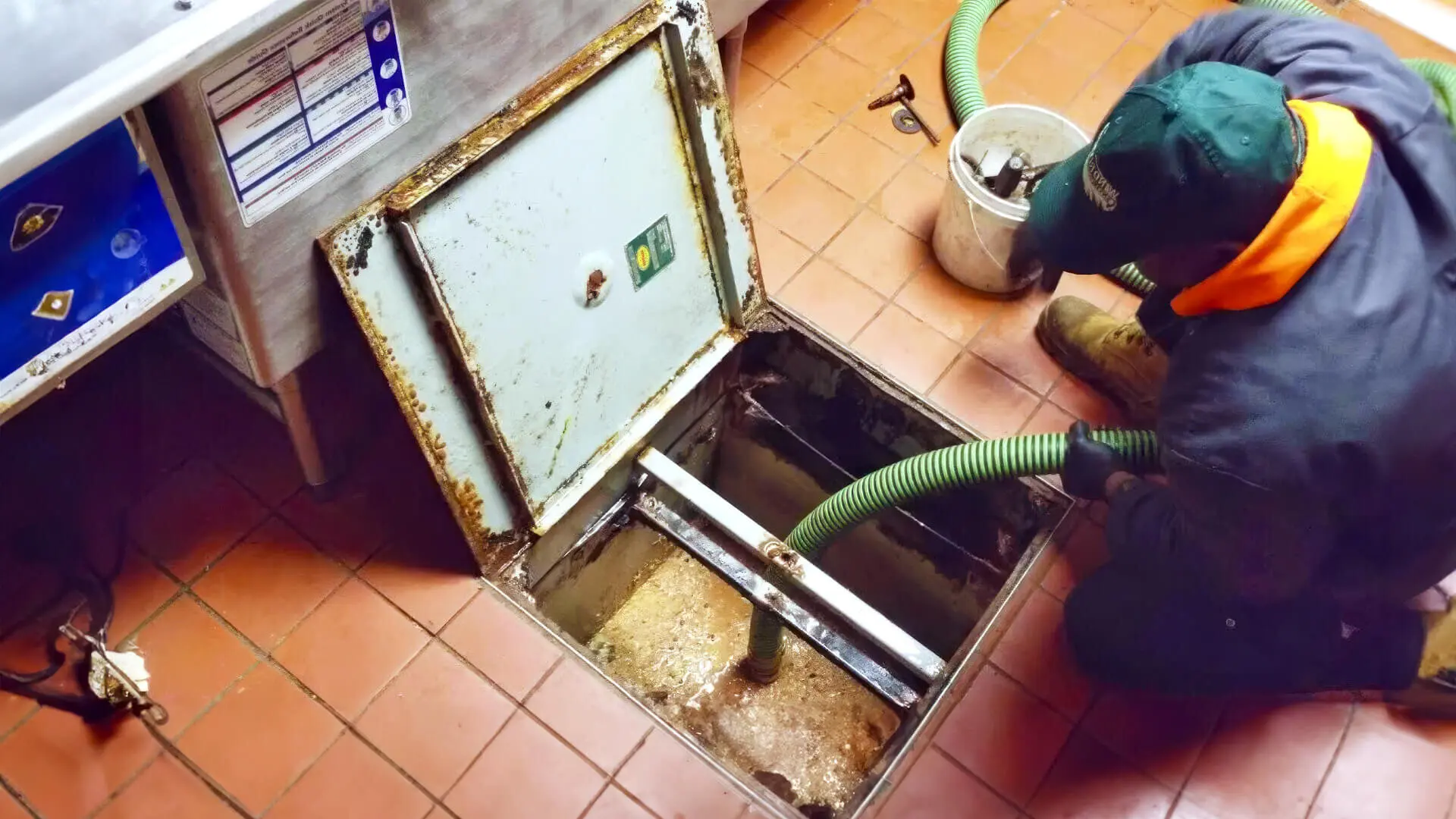
Our grease trap maintenance service ensures your kitchen's grease trap operates efficiently and meets local regulations. We provide scheduled pumping, thorough cleaning, and proper disposal of grease waste. Regular maintenance prevents costly backups, foul odors, and environmental violations. Our team handles everything from routine maintenance to emergency services, keeping your kitchen running smoothly.
Grease traps are essential components of commercial kitchen plumbing systems, designed to intercept fats, oils, and grease before they enter the wastewater system. When functioning properly, they prevent sewer blockages and protect the environment from harmful contamination. However, without regular maintenance, grease traps become ineffective and can create serious problems for your business.
Our comprehensive grease trap maintenance program begins with an assessment of your current system and usage patterns. We determine the optimal service frequency based on your kitchen's volume and local regulations. Our technicians then perform thorough pumping of accumulated grease and solids, ensuring your trap has adequate capacity for continued operation.
Beyond pumping, we provide complete cleaning of all grease trap components. This includes scraping walls and baffles to remove built-up residue, inspecting inlet and outlet pipes for blockages, and checking for signs of damage or wear. We also document grease volume removed for regulatory compliance and can provide reports required by local authorities.
Proper grease trap maintenance is not just about preventing problems; it is also a legal requirement in most jurisdictions. Municipalities enforce strict regulations on grease trap maintenance to protect sewer systems and water quality. Failure to comply can result in significant fines, mandatory closures, and liability for cleanup costs. Our service ensures you meet all regulatory requirements while protecting your business from costly emergencies.
Service Overview
Grease trap maintenance is essential for any commercial kitchen generating fats, oils, and grease. This service prevents plumbing backups, ensures regulatory compliance, and protects the environment. Regular professional maintenance keeps your grease trap functioning efficiently and prevents costly emergency situations.
Our Process
Our grease trap maintenance follows a systematic approach to ensure thorough service. We begin by locating and accessing your grease trap, then pump out all accumulated grease and solids using specialized vacuum equipment. Our technicians thoroughly scrape and clean all interior surfaces, baffles, and components. We inspect inlet and outlet pipes for blockages, check the trap for damage or leaks, and document the volume of waste removed. All waste is properly transported and disposed of at licensed facilities.
Benefits
Regular grease trap maintenance prevents costly plumbing emergencies and sewer backups. It ensures compliance with local regulations, avoiding fines and potential business closure. Proper maintenance eliminates foul odors that can affect your kitchen and dining areas. It also extends the lifespan of your grease trap system and protects your business reputation.
Key Benefits
- Complete grease and solids pumping
- Thorough interior cleaning and scraping
- Inlet and outlet pipe inspection
- Baffle inspection and cleaning
- Proper waste disposal at licensed facilities
Industries We Serve
Service Areas
We provide grease trap maintenance throughout the Dallas-Fort Worth Metroplex, including all major cities and surrounding areas. Our mobile service teams are equipped to handle projects of all sizes, from small restaurants to large commercial facilities.
Locations We Serve
Contact Information

services planning guide
How to plan grease trap maintenance for a commercial kitchen in Dallas
Commercial Kitchen Cleaning of Texas uses the following planning framework to help property managers and business owners turn a request for commercial kitchen and food-service cleaning into a scope that can be walked, priced, scheduled, and checked. It is designed for practical comparison and does not replace site-specific safety, material, vendor, or regulatory requirements.
Define the Work Before Pricing It
Change orders are easier to avoid when the initial grease trap maintenance proposal records current conditions. Photographs, floor-type notes, access limitations, and known buildup give both sides a shared baseline for deciding what belongs in startup work and what belongs in recurring maintenance. Square footage alone does not define the effort required for grease trap maintenance. Occupancy, floor materials, restroom count, food or production activity, security procedures, furniture density, and the time available between closing and reopening all affect labor and equipment planning. For multi-tenant or mixed-use properties, grease trap maintenance should be divided by responsibility zone. Common areas, tenant suites, back-of-house spaces, loading areas, public restrooms, and restricted rooms can then receive schedules and approval rules that match their actual use. Grease Trap Maintenance should begin with a written definition of the rooms, surfaces, fixtures, equipment boundaries, and access conditions included in the work. A useful scope separates routine tasks from periodic restoration so the facility manager can see what happens on every visit and what occurs only on a planned cycle.
Build the Schedule Around Operations
A dependable plan includes a method for reporting schedule changes. The facility contact should know whom to notify, how much lead time is needed, and how missed or added visits affect the monthly program before an urgent request arises. For Dallas–Fort Worth properties, travel windows and building access can materially affect the usable service period. A realistic schedule accounts for security handoffs and operating deadlines rather than promising a start time that leaves too little time to finish. Daytime and after-hours service solve different operational problems. Day porter coverage manages visible conditions while people are present; after-hours crews complete disruptive or time-intensive tasks when work areas can be accessed safely and thoroughly. Scheduling should be built around operating hours and risk, not around the cleaning company’s convenience. Some commercial kitchen environments need a complete after-hours reset, while others benefit from daytime attention to entrances, restrooms, spills, or high-traffic common areas.
Make Quality Control Observable
Useful performance conversations separate an isolated miss from a recurring process failure. One unemptied bin requires correction; repeated misses in the same wing may indicate unclear zoning, inadequate time, or a checklist that does not match the building. Inspection frequency should reflect the complexity of the account. A small weekly office may need periodic supervisory review, while a high-traffic or regulated environment may require documented checks several times each week. The account review should examine service requests, inspection findings, occupancy changes, supply use, and upcoming facility events. That review keeps the program aligned with the property instead of allowing an old scope to continue after the building changes. A single complaint channel prevents service issues from disappearing between building occupants, property management, and the cleaning crew. Requests should be logged with the location, task, urgency, and desired completion time so the response can be verified.
Match Methods to Materials and Risk
Dwell time and physical removal are central to effective cleaning. A product cannot perform as intended if it is wiped away immediately, and loosened soil still needs to be removed with clean tools rather than redistributed across the surface. Color-coded cloths, pads, and tools can reduce cross-use between restrooms, food areas, workspaces, and public surfaces. The exact system matters less than having a documented method the crew can follow consistently. A material-safety discussion should include storage and labeling. Facility contacts should know where products and equipment will be kept, which rooms remain accessible to occupants, and how spills or damaged containers are reported. Equipment should be selected for the facility rather than for convenience. HEPA filtration, low-moisture extraction, auto-scrubbing, water-fed poles, pressure equipment, or detail tools may be appropriate depending on access, surface, soil, and reopening time.
Use the Walkthrough to Build the Scope
Bring a current floor plan, operating schedule, and list of known problem areas to the walkthrough. These details help Commercial Kitchen Cleaning of Texas organize grease trap maintenance around actual conditions instead of estimating from square footage and a short phone description. A useful walkthrough ends with next steps: who will receive the written scope, who can approve revisions, whether a second technical visit is required, and what information is still needed before pricing is final. Access and safety constraints should be demonstrated, not merely mentioned. Alarm panels, loading doors, restricted areas, waste points, water access, electrical access, and equipment storage can change the labor plan materially. If the requested grease trap maintenance includes restorative work, identify the difference between a first-service reset and ongoing maintenance. Startup work may require additional labor that should not be hidden inside the recurring visit price.
Put the Service Agreement in Writing
Cancellation, renewal, and notice terms deserve the same attention as the cleaning checklist. A facility manager comparing proposals should understand the initial term, renewal method, price-review process, and the notice required to change or end service. A commercial cleaning agreement should attach or reproduce the approved scope, frequency, service window, periodic task calendar, supply responsibilities, access rules, and communication contacts. The written detail protects both the property and the service team. Pricing should state whether it is monthly, per visit, hourly, or project based and should identify the assumptions behind it. Changes in occupied square footage, frequency, access time, or task scope need an agreed method for repricing. The agreement should state how holidays, weather closures, and client-requested skips are handled. These events affect visit counts and staffing, and the billing treatment should be clear before the first calendar exception.
Plan for Dallas Facility Conditions
Heat and air-conditioning runtime can increase dust movement through vents, ledges, high surfaces, and return-air zones. Periodic detail work should be scheduled before accumulation becomes visible or begins cycling back into occupied areas. Properties across Dallas–Fort Worth vary widely in access, occupancy, and operating schedule. A downtown office, suburban medical suite, industrial building, retail center, and hospitality property should not receive the same labor plan simply because their square footage is similar. Storm seasons can create short-notice needs around entrances, exterior glass, tracked moisture, construction material, and debris. A recurring account should know how to request work outside the normal scope and whether priority response is available. A local service plan should account for the property’s immediate environment. Construction nearby, open parking, landscaping, loading activity, and pedestrian traffic can change how quickly dust and debris return after a visit.
Compare Providers on More Than Price
The final decision should align service frequency with the facility’s real use. Buying fewer visits than the property needs creates visible decline; buying unnecessary frequency wastes budget that could be directed to periodic or high-priority work. A pilot or structured startup can be useful when the facility is complex or the current condition is uncertain. Define what will be evaluated, how long the evaluation lasts, and what information determines the permanent scope. Review the proposal for vague language. Terms such as “as needed,” “regularly,” and “periodically” should be converted into frequencies, triggers, or approval rules before the agreement is signed. When comparing grease trap maintenance proposals, normalize the scope before comparing price. A lower monthly number may exclude periodic work, supplies, supervision, floor care, or enough labor to complete the stated checklist.
Start, Measure, and Adjust the Program
A stable program still needs review after renovations, staffing growth, seasonal traffic, operating-hour changes, or new equipment. Each change can alter soil load, access, or the time available for grease trap maintenance. Crew orientation should cover the approved scope, building access, material cautions, waste handling, supply storage, security, and the communication path for exceptions. Written information is more dependable than verbal instructions passed between shifts. Closeout reporting should match the account’s complexity. A small property may need simple completion confirmation; a larger or specialized account may need inspection notes, issue photographs, supply alerts, and a record of periodic tasks. After the first service cycle, compare actual labor and facility condition with the proposal assumptions. If the original scope was inaccurate, adjust it openly rather than expecting quality to survive an unrealistic workload.
Bring to the walkthrough
- Approximate square footage, floor plan, and operating hours
- Current frequency, known complaints, and priority areas
- Flooring and surface notes, restricted rooms, and access rules
- Desired start date, budget constraints, and approval contacts
Expect in a written proposal
- Task scope by zone and visit frequency
- Service windows, periodic work, and supply responsibility
- Quality checks, communication, and correction procedures
- Pricing assumptions, exclusions, and change-order rules