Commercial Oven and Range Cleaning
Deep cleaning of ovens, ranges, and cooking equipment to improve efficiency and prevent fire hazards from grease buildup.
About Our Commercial Oven and Range Cleaning Service
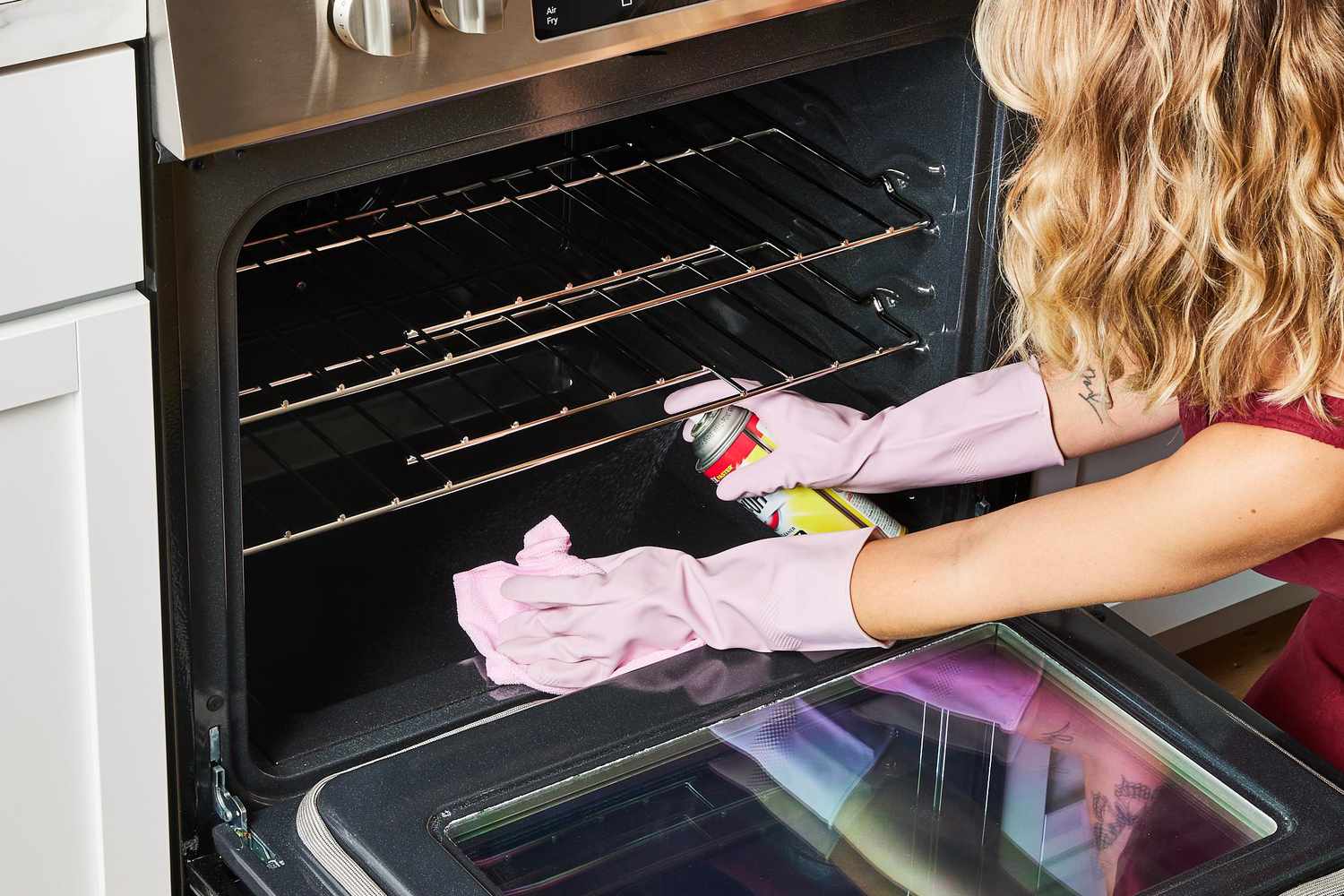
Our commercial oven and range cleaning service removes baked-on grease, carbon deposits, and food residue from your cooking equipment. We clean ovens, stovetops, griddles, fryers, and ranges to improve cooking efficiency and prevent fire hazards. Clean equipment operates more efficiently, uses less energy, and produces better-quality food. Our technicians handle both daily cleaning needs and heavy-duty restoration cleaning.
Commercial cooking equipment represents a significant investment for any food service operation. Regular professional cleaning protects this investment while ensuring optimal performance and safety. Built-up grease and carbon not only create fire hazards but also affect heat distribution and food quality.
Our comprehensive oven and range cleaning service addresses all components of your cooking equipment. Interior oven surfaces are degreased and descaled to remove carbon buildup that affects heat circulation. Burners and grates are removed and thoroughly cleaned to ensure proper flame patterns and even heating. Control knobs, handles, and exterior surfaces are detailed to remove grease and fingerprints.
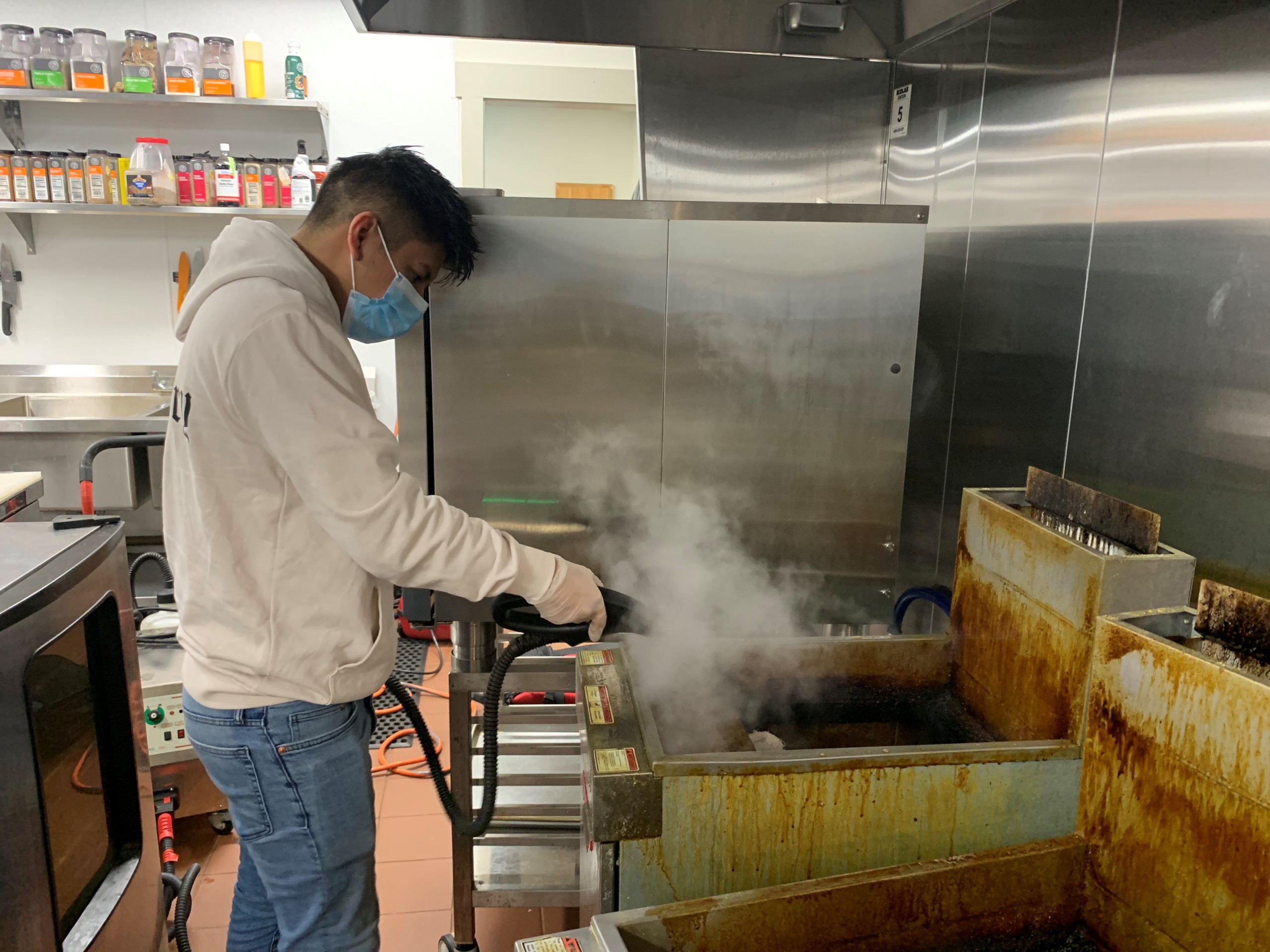
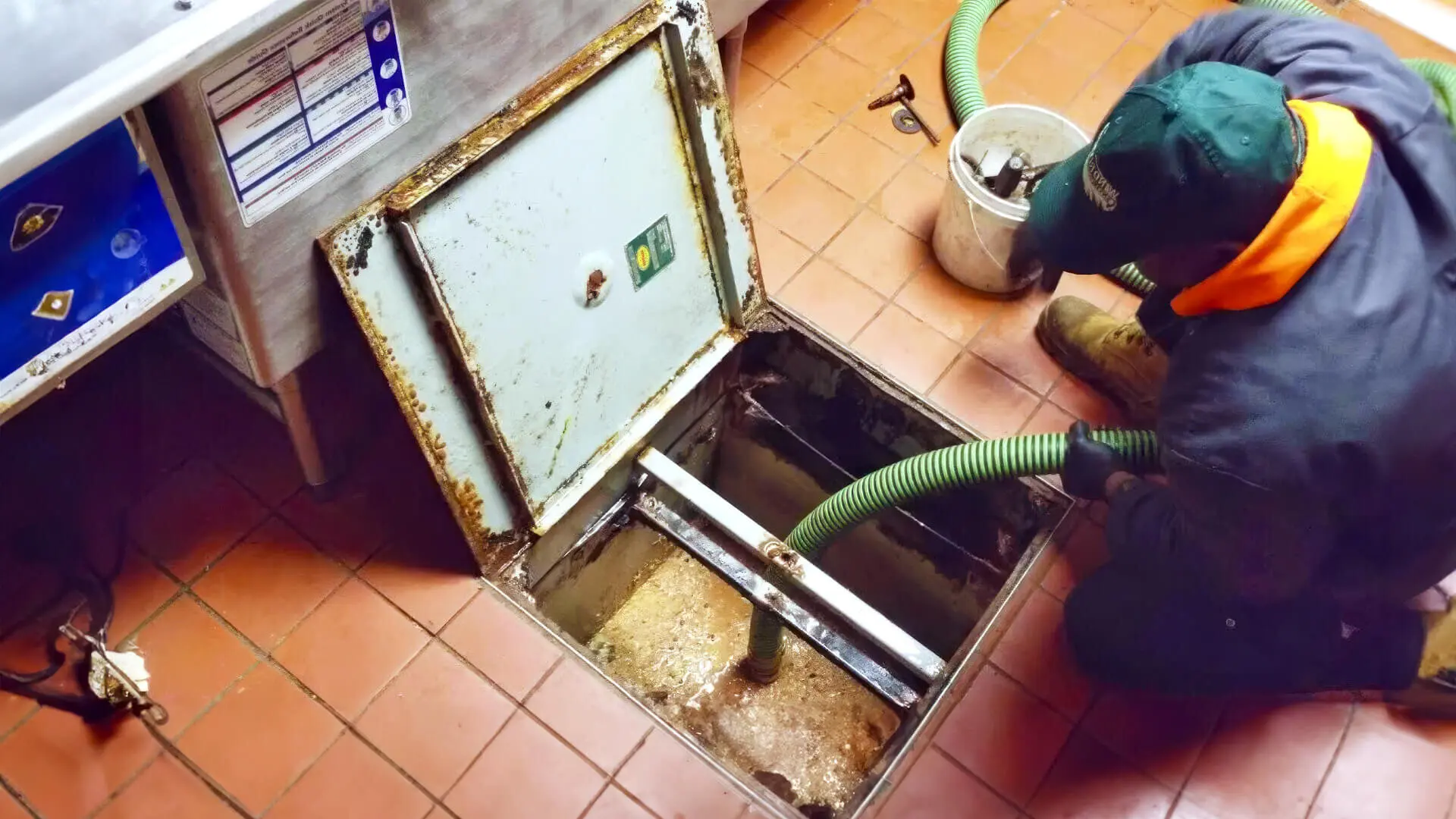
We pay special attention to high-risk areas such as grease traps, drip pans, and areas beneath burners where accumulation creates fire hazards. Griddles receive intensive cleaning and reseasoning when needed. Fryers are boiled out to remove carbonized oil and food particles that affect oil quality and food taste.
Clean cooking equipment performs better and lasts longer. Even heat distribution improves food quality and consistency. Energy efficiency reduces utility costs. Most importantly, clean equipment significantly reduces fire risk, protecting your business, employees, and customers from dangerous and costly incidents.
Service Overview
Commercial oven and range cleaning is a specialized service that removes grease and carbon buildup from cooking equipment. This service improves equipment performance, extends lifespan, and reduces fire hazards. Professional cleaning is essential for maintaining safe, efficient kitchen operations.
Our Process
Our oven and range cleaning follows a systematic approach for thorough results. We begin by cooling equipment and removing racks, grates, and removable components. Technicians apply commercial degreasers that break down baked-on carbon and grease. Interior surfaces are scrubbed and detailed, with special attention to corners and crevices. Burners and pilot lights are cleaned for optimal performance. Exterior surfaces are polished and all components are reassembled and tested.
Benefits
Regular professional oven cleaning significantly improves cooking efficiency and food quality. It reduces fire hazards from grease accumulation. Clean equipment uses less energy, lowering utility costs. Professional maintenance also extends the lifespan of expensive cooking equipment and reduces the need for costly repairs.
Key Benefits
- Interior oven degreasing
- Carbon and buildup removal
- Burner and grate cleaning
- Control panel detailing
- Griddle cleaning and reseasoning
Industries We Serve
Service Areas
We provide commercial oven and range cleaning throughout the Dallas-Fort Worth Metroplex, including all major cities and surrounding areas. Our mobile service teams are equipped to handle projects of all sizes, from small restaurants to large commercial facilities.
Request a Quote
Get a free, no-obligation quote for commercial oven and range cleaning services.
Get Your QuoteLocations We Serve
Contact Information
services planning guide
How to plan commercial oven and range cleaning for a commercial kitchen in Dallas
Commercial Kitchen Cleaning of Texas uses the following planning framework to help property managers and business owners turn a request for commercial kitchen and food-service cleaning into a scope that can be walked, priced, scheduled, and checked. It is designed for practical comparison and does not replace site-specific safety, material, vendor, or regulatory requirements.
Define the Work Before Pricing It
Commercial Oven And Range Cleaning should begin with a written definition of the rooms, surfaces, fixtures, equipment boundaries, and access conditions included in the work. A useful scope separates routine tasks from periodic restoration so the facility manager can see what happens on every visit and what occurs only on a planned cycle. Before pricing commercial oven and range cleaning, document exclusions as carefully as inclusions. Exterior work, high access, consumable supplies, waste handling, specialty floor restoration, equipment interiors, and event cleanup can be scheduled correctly only when responsibility is explicit. Square footage alone does not define the effort required for commercial oven and range cleaning. Occupancy, floor materials, restroom count, food or production activity, security procedures, furniture density, and the time available between closing and reopening all affect labor and equipment planning. The strongest commercial oven and range cleaning plan names measurable outcomes rather than relying on broad phrases such as “keep it clean.” Examples include streak-free entry glass, stocked and odor-controlled restrooms, debris-free floor edges, sanitized touchpoints, and completion before a stated opening time.
Build the Schedule Around Operations
Facilities with irregular occupancy should use a flexible service calendar. Seasonal traffic, events, construction phases, tenant move-ins, inventory cycles, and weather can all create temporary cleaning demand that a rigid schedule will miss. Recurring commercial oven and range cleaning should include planned periodic work instead of waiting for visible deterioration. Rotating detail tasks through monthly or quarterly cycles protects floors, fixtures, glass, vents, edges, and other zones that routine visits cannot address completely. A nightly, daily, weekly, or project schedule changes more than visit frequency. It changes how much soil accumulates between visits, which tools are appropriate, how long each visit takes, and whether periodic deep work must be layered into the agreement. Access planning is part of service planning. Keys, badges, alarm procedures, loading access, elevator reservations, escort rules, and locked-room approvals should be confirmed before the first commercial oven and range cleaning visit so the crew can complete the full scope without improvising.
Make Quality Control Observable
Inspection frequency should reflect the complexity of the account. A small weekly office may need periodic supervisory review, while a high-traffic or regulated environment may require documented checks several times each week. Consistent crew assignments improve commercial oven and range cleaning because the team learns access routines, material sensitivities, recurring problem areas, and the expectations of the facility contact. Coverage plans are still necessary for absences so consistency does not depend on one individual. A quality program should explain how corrections are handled. The facility contact needs a clear response path, a reasonable correction window, and confirmation when the issue is closed rather than a vague assurance that someone will look into it. A single complaint channel prevents service issues from disappearing between building occupants, property management, and the cleaning crew. Requests should be logged with the location, task, urgency, and desired completion time so the response can be verified.
Match Methods to Materials and Risk
A material-safety discussion should include storage and labeling. Facility contacts should know where products and equipment will be kept, which rooms remain accessible to occupants, and how spills or damaged containers are reported. Equipment should be selected for the facility rather than for convenience. HEPA filtration, low-moisture extraction, auto-scrubbing, water-fed poles, pressure equipment, or detail tools may be appropriate depending on access, surface, soil, and reopening time. Product selection should match the task and the occupied environment. Cleaning, degreasing, disinfecting, descaling, and finishing are different functions; using one product for every surface can leave residue, reduce effectiveness, or shorten asset life. Color-coded cloths, pads, and tools can reduce cross-use between restrooms, food areas, workspaces, and public surfaces. The exact system matters less than having a documented method the crew can follow consistently.
Use the Walkthrough to Build the Scope
If the requested commercial oven and range cleaning includes restorative work, identify the difference between a first-service reset and ongoing maintenance. Startup work may require additional labor that should not be hidden inside the recurring visit price. Access and safety constraints should be demonstrated, not merely mentioned. Alarm panels, loading doors, restricted areas, waste points, water access, electrical access, and equipment storage can change the labor plan materially. Bring a current floor plan, operating schedule, and list of known problem areas to the walkthrough. These details help Commercial Kitchen Cleaning of Texas organize commercial oven and range cleaning around actual conditions instead of estimating from square footage and a short phone description. Discuss current service honestly during the walkthrough. What works should be preserved, what fails should be corrected, and any unrealistic expectation should be resolved before it becomes a recurring dispute after startup.
Put the Service Agreement in Writing
Insurance and vendor-document requirements should be confirmed during proposal review rather than after award. If the property requires a certificate, additional insured wording, vendor portal registration, or special access documentation, those steps can affect the startup date. A structured startup period gives both sides a chance to refine the scope. Early inspections and a scheduled review after the first few visits can resolve workload assumptions before they become embedded in a long-term program. A commercial cleaning agreement should attach or reproduce the approved scope, frequency, service window, periodic task calendar, supply responsibilities, access rules, and communication contacts. The written detail protects both the property and the service team. The agreement should explain how additional work is approved. Emergency cleanup, event service, construction dust, floor restoration, and extra porter coverage should not be performed or billed through an informal request that no one can later verify.
Plan for Dallas Facility Conditions
Storm seasons can create short-notice needs around entrances, exterior glass, tracked moisture, construction material, and debris. A recurring account should know how to request work outside the normal scope and whether priority response is available. Commercial properties in the region frequently combine offices, warehouses, showrooms, food service, or public-facing areas under one address. Zoning the scope by use keeps the cleaning method appropriate for each part of the building. DFW traffic makes realistic arrival windows important, especially when a crew must meet security or elevator access at a fixed time. The plan should protect enough on-site time to complete the work rather than compressing the scope after a delayed handoff. Heat and air-conditioning runtime can increase dust movement through vents, ledges, high surfaces, and return-air zones. Periodic detail work should be scheduled before accumulation becomes visible or begins cycling back into occupied areas.
Compare Providers on More Than Price
When comparing commercial oven and range cleaning proposals, normalize the scope before comparing price. A lower monthly number may exclude periodic work, supplies, supervision, floor care, or enough labor to complete the stated checklist. A pilot or structured startup can be useful when the facility is complex or the current condition is uncertain. Define what will be evaluated, how long the evaluation lasts, and what information determines the permanent scope. References are most useful when the compared account resembles the property in size, use, and schedule. A successful small office account does not by itself demonstrate the systems needed for a large, high-traffic, or specialized facility. Evaluate communication alongside cleaning technique. A facility manager needs timely updates, a named account contact, documented service requests, and a reliable process for resolving issues without repeatedly explaining the account.
Start, Measure, and Adjust the Program
Crew orientation should cover the approved scope, building access, material cautions, waste handling, supply storage, security, and the communication path for exceptions. Written information is more dependable than verbal instructions passed between shifts. A stable program still needs review after renovations, staffing growth, seasonal traffic, operating-hour changes, or new equipment. Each change can alter soil load, access, or the time available for commercial oven and range cleaning. The crew should record conditions outside the approved scope rather than quietly ignoring them or performing unapproved work. Photos and concise notes allow the facility manager to decide whether a separate service is warranted. Periodic tasks should be placed on a calendar at startup. Floor work, carpet extraction, glass detailing, vent cleaning, high dusting, pressure cleaning, and other rotating services are easier to budget when dates are planned.
Bring to the walkthrough
- Approximate square footage, floor plan, and operating hours
- Current frequency, known complaints, and priority areas
- Flooring and surface notes, restricted rooms, and access rules
- Desired start date, budget constraints, and approval contacts
Expect in a written proposal
- Task scope by zone and visit frequency
- Service windows, periodic work, and supply responsibility
- Quality checks, communication, and correction procedures
- Pricing assumptions, exclusions, and change-order rules